Norway
About Norway

Norway have never won the World Cup and have qualified only three times — 1938, 1994, and 1998. Their most memorable moment came in 1998 when they beat Brazil 2-1 in the group stage, with Tore André Flo and Kjetil Rekdal scoring. Ole Gunnar Solskjær and Ronny Johnsen were part of that squad. They failed to qualify for every tournament from 2002 through 2022, making 2026 a significant return to the global stage built almost entirely around Haaland's emergence.
Norway's road to the final
Players to watch
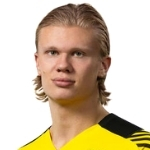 Erling Haaland
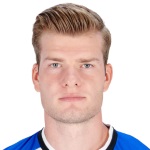 Alexander Sørloth
Solbakken typically deploys a 4-3-3 with Ødegaard as the advanced central midfielder, Sander Berge providing defensive cover behind him, and Patrick Berg completing the trio. Julian Ryerson and Marcus Pedersen push forward as attacking full-backs to create width, freeing Haaland to operate centrally. The shape collapses into a compact 4-5-1 without the ball, with the team looking to win possession and release Haaland in behind with one or two passes.
The focal point of everything Norway do is Erling Haaland, whose movement in behind and ruthless finishing for Manchester City make him the most feared centre-forward at the tournament. Martin Ødegaard pulls the strings from Arsenal's number-eight role, dictating tempo with his quick passing and intelligent positioning. Alexander Sørloth offers a powerful physical alternative up front, having scored prolifically for Atlético Madrid, giving Stale Solbakken a genuine two-striker threat.
Haaland's finishing is a structural advantage that no defensive plan fully neutralises. Ødegaard's ability to find pockets between the lines and play incisive through-balls gives Norway a creative quality that belies their direct style. Berge's physicality and range of passing from deep provides genuine midfield control.
Beyond Haaland and Ødegaard, the squad lacks consistent Champions League-level quality — Kristian Thorstvedt is at relegated Sassuolo, and Morten Thorsby at Cremonese. The centre-back pairing of Leo Østigård and Kristoffer Ajer has been error-prone at club level, and if Haaland is marked out of a game, Norway have no obvious alternative creative mechanism.
The lines
Haaland leads the line with devastating efficiency, while Sørloth's aerial power and hold-up play offer a different physical dimension. Jørgen Strand Larsen at Crystal Palace provides a third option, and Antonio Nusa can stretch defences from wide positions.
Ødegaard is the creative hub, operating between the lines to link defence and attack. Berge anchors the midfield with his physicality and reading of the game, while Berg from Bodø/Glimt adds pressing intensity. Fredrik Aursnes and Oscar Bobb provide rotational depth and versatility.
Ryerson at Borussia Dortmund is the most reliable defender in the squad, comfortable attacking and defending. Ajer and Østigård form the central partnership, though neither commands consistent confidence. Torbjørn Heggem at Bologna adds competition, and David Møller Wolfe provides cover across the backline.
Ørjan Nyland at Sevilla is the established first choice, an experienced shot-stopper who has been Norway's number one for several years. He is reliable rather than spectacular, and Solbakken has shown consistent faith in him despite limited La Liga minutes.
Squad













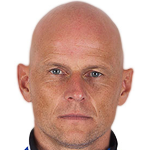 Manager: Stale SolbakkenView profile →
Fixtures & results
Frequently asked questions
What are Norway's chances of winning the 2026 World Cup?
Norway have a 0% chance to win the World Cup and 1% to reach the final, per our simulation.
What group is Norway in at the 2026 World Cup?
Norway are in Group I at the 2026 FIFA World Cup.
Who is Norway's manager?
Norway are managed by Stale Solbakken.
Who are Norway's players to watch?
Key players to watch for Norway include Erling Haaland, Martin Ødegaard, Alexander Sørloth.
See the full World Cup 2026 title odds and predicted bracket.